

Table of Contents
You rebrand without alienating customers by first proving it solves a measurable problem like churn, win rates, CAC payback, or support confusion. Start with what customers already love—pull it from NPS, reviews, and tickets—then lock those promises, tone cues, and recognizable visuals into continuity guardrails. Test new messaging and designs with A/B holdouts, segment results by tenure and spend, and roll out in stages with clear “what’s changing” and “what’s not.” Keep going to see a step-by-step rollout plan.
Key Takeaways
- Verify rebranding solves measurable business problems, then test small changes (landing pages, ads, onboarding) before a full overhaul.
- Document what loyal customers love and rely on, and lock those anchors (promises, behaviors, tone, recognizable cues) as non-negotiables.
- Define clear goals and guardrails (conversion, churn, NPS, tickets), segment results by tenure/spend, and rollback if key metrics drop.
- Communicate the “why,” what stays the same, and what changes in plain language across email, in-app, support, and sales.
- Roll out in stages to customer segments, monitor confusion signals (searches, tickets, task time), and update every touchpoint consistently from one source of truth.
Decide If You Should Rebrand at All

Before you invest in a new logo, name, or positioning, verify that a rebrand actually solves a measurable business problem. Look at customer retention, win rates, CAC payback, NPS, and branded search trends to see whether perception is holding revenue back or whether execution is the issue.
If your strongest segments keep converting and renewing, you may need sharper messaging, not a reset.
Test Market timing: are category terms shifting, new entrants redefining expectations, or macro conditions changing how buyers evaluate risk? Then audit Brand consistency across touchpoints—product UI, support, sales decks, invoices—because inconsistency creates confusion you’ll mistake for “brand fatigue.”
Run small experiments (landing pages, ads, onboarding copy) and quantify lift before committing to a full overhaul.
Define the Rebrand Problem You’re Solving
Even if your gut says “we’ve outgrown our brand,” you’ll make better decisions when you name the specific business constraint the rebrand must remove—misfit positioning that attracts the wrong leads, low trust that drags win rates, confusion that inflates support volume, or weak differentiation that forces discounting.
Start by mapping symptoms to metrics: MQL-to-SQL conversion, sales cycle length, churn, NPS, return rates, and ticket categories.
Then form a hypothesis: “Our brand identity signals X, but our best-fit buyers need Y,” or “Prospects can’t tell us apart, so price becomes the decision.”
Validate with customer interviews, win/loss notes, and search/traffic data, not internal opinions.
Define success as measurable deltas and guardrails that protect customer loyalty during the shift.
List What Customers Already Love About You
Once you’ve defined the business problem your rebrand must solve, anchor the change in what’s already working by listing the reasons customers choose you and stick around. Don’t guess—pull evidence from NPS verbatims, support tickets, reviews, win/loss notes, and repeat-purchase data.
Translate that input into a tight set of “love statements” in customers’ words: what you help them do, how you make them feel, and what you consistently deliver. Quantify each claim with a metric (resolution time, on-time rate, retention, referral share) so it’s more than opinion.
This inventory protects Customer loyalty because it shows you what people would miss if it changed. It also reinforces Brand authenticity by grounding your rebrand in proven, lived experiences, not internal preferences or trends.
Choose What Stays the Same (Continuity)
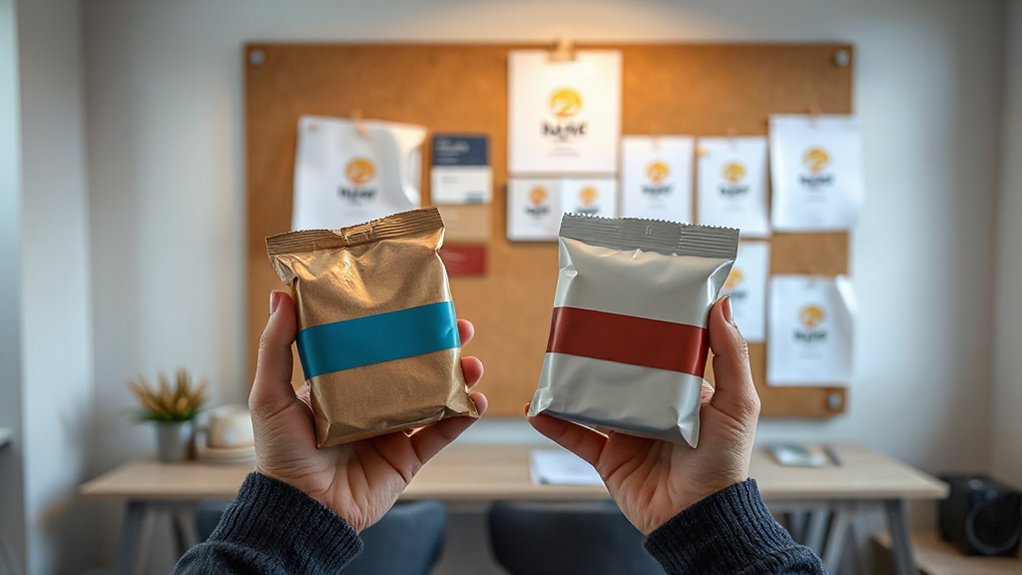
Because a rebrand amplifies what you change, you should deliberately lock in the elements customers already rely on—then treat them as non-negotiables. Use evidence, not instinct: review retention cohorts, NPS verbatims, support tickets, repeat-purchase rates, and “reason for choosing us” survey answers to pinpoint what feels familiar and safe.
Document those anchors in a continuity brief: your promise, core product behaviors, service standards, tone, and the cues that signal trust at a glance. When you preserve these, you protect brand consistency across touchpoints, so customers don’t have to relearn how to buy, use, or get help.
You’ll also reduce change-friction that quietly erodes customer loyalty. Set clear thresholds (complaints, churn, task completion time) and monitor them weekly to confirm continuity holds during rollout.
Choose What Changes: and Why It Matters
Where should you change—and where should you resist the urge? Start by mapping what customers actually notice and value. Use support tickets, NPS verbatims, churn reasons, and repeat-purchase cohorts to separate cosmetic friction from trust drivers. If data shows confusion around what you do, a clearer name, positioning line, or navigation can reduce drop-off without touching the cues that signal reliability.
Change elements that improve comprehension and accessibility: messaging hierarchy, product taxonomy, onboarding flow, and visual system cleanup. Keep the promise signals steady—pricing logic, core benefits, and service standards—so branding consistency doesn’t break recognition.
When you modernize the look, test recognition and preference with existing customers first; small shifts can lift recall while protecting customer loyalty. Document decisions so teams don’t improvise later.
Set Customer-Visible Rebrand Goals
You can’t ask customers to trust a rebrand unless you restate your public promises in measurable terms—what you’ll keep, what you’ll improve, and how you’ll prove it. Use customer feedback, retention trends, and support data to set goals they can see and feel, not just internal milestones.
Then define the visible change scope upfront (name, visuals, messaging, product experience) so expectations stay aligned and surprises don’t erode loyalty.
Clarify Public Brand Promises
How will customers know your rebrand improves their experience rather than just your logo? You’ve got to translate intent into public promises they can verify.
Start by naming 2–3 outcomes customers care about—faster resolution, clearer pricing, fewer handoffs—and tie each to a measurable commitment (e.g., “90% of tickets answered in 2 hours”). Use baseline data so the promise feels credible, then publish how you’ll report progress.
Keep language plain, specific, and consistent across site, support scripts, and product messaging to protect brand consistency. Invite customers to hold you accountable with feedback loops and a visible escalation path.
When you meet promises repeatedly, you reduce uncertainty, earn trust, and strengthen customer loyalty without asking anyone to “believe” in the rebrand.
Define Visible Change Scope
Public promises only build trust when customers can see exactly what’s changing—and what isn’t. Define your visible change scope in customer terms: which touchpoints will look, sound, or behave differently (logo, app UI, packaging, support scripts), and which will stay stable (pricing, product quality, policies).
Make it measurable: target awareness lift, reduced confusion in support tickets, higher task completion, or improved NPS among existing users—not just new prospects.
Protect Brand consistency by setting guardrails for tone, naming, and iconography, then audit every channel for drift.
Manage Customer perception by previewing changes with loyal segments, running A/B tests on key flows, and tracking sentiment and churn by cohort. If metrics worsen, roll back fast and explain why clearly.
Know Who You’re Rebranding For
Before changing a logo, tone, or product promise, get ruthlessly clear on which customers you’re protecting and which new ones you’re trying to win.
Start with Customer segmentation grounded in behavior: retention cohorts, expansion rates, price sensitivity, and support load—not assumptions or anecdotes.
Map who drives lifetime value and referrals, and where Brand loyalty is highest or fragile.
Then define the “non-negotiables” those customers associate with you: reliability, speed, service, status, or values.
If your rebrand shifts any of them, quantify the risk in churn probability and revenue impact.
Finally, name the future customers you’re targeting and the job they hire you for.
If that job conflicts with your core base, you’re not rebranding—you’re switching businesses.
Test Key Rebrand Elements With Customers

Even if your new identity feels “obvious” internally, you should validate the riskiest pieces with customers in controlled, measurable tests. Start with what could break recognition: name tweaks, logo shape, color palette, packaging, navigation labels, and pricing page layout.
Run A/B tests on high-traffic pages, and use holdouts so you can attribute lift or damage. Pair quantitative signals (CTR, conversion, retention, support tickets, NPS) with qualitative interviews to learn why behavior changed.
Segment results by tenure and spend to protect Brand loyalty among your best customers, not just net-new visitors. Set guardrails: if repeat purchase rate or task success drops beyond a defined threshold, roll back and iterate.
Share what you learned, and you’ll preserve Customer trust while moving forward.
Rebrand Your Voice (Without Sounding New)
Although your visuals may change overnight, your voice has to evolve in a way customers can recognize instantly. Start by auditing real customer touchpoints—support tickets, chats, reviews—and quantify what resonates: reply time satisfaction, sentiment, and top phrases customers repeat back to you. Those patterns become your “non-negotiables” for voice consistency.
Next, define controlled tone adaptation by context, not by trend. You can sound warmer in onboarding, more direct in incident updates, and more consultative in sales—while keeping the same vocabulary, sentence length, and level of certainty customers trust.
Build a short style guide with do/don’t examples, then A/B test subject lines, help-center headings, and agent macros for comprehension and CSAT lift. Train teams with role-play and QA so the shift feels familiar, not fake.
Refresh Visuals Without Losing Recognition
When you refresh your visual identity, you can change what’s modern without changing what customers use to spot you in a split second. Keep your most recognizable assets—core colors, logo silhouette, or typographic rhythm—then update secondary elements like icon style, spacing, and photography. That balance protects Brand recognition while signaling progress.
Use data before you redesign: review top traffic pages, packaging, and app screens to find the visuals customers see most, then prioritize those touchpoints. A/B test variations in ads or emails and track lift in recall, click-through, and conversion.
Set guardrails for Visual consistency: define color tolerances, minimum logo sizes, and layout grids so teams don’t improvise. Roll updates in waves, starting with high-frequency assets, and monitor support tickets for confusion.
Explain the Rebrand in Plain Language
You need to state the why in plain terms, backed by the customer outcomes and metrics that drove the change.
You should also highlight what’s staying the same—your values, service promise, and the parts customers recognize—so trust doesn’t reset to zero.
Then describe what’s changing in simple, concrete language, focusing on what customers will notice and what it means for them.
State The Why Clearly
Because customers don’t fear change as much as they fear surprises, state the reason for your rebrand in plain language and tie it to measurable benefits they’ll actually notice—faster support response times, a cleaner product experience, more consistent pricing, or improved reliability.
Anchor your “why” in facts: cite the SLA you’re targeting, the bug-rate drop you expect, or the onboarding steps you’ve removed.
You’ll protect Customer trust by explaining the problem you’re solving, not selling a vague vision. Show what triggered the shift—new markets, scale, or compliance—and connect it to outcomes customers can verify in their next few interactions.
Keep the message consistent across email, in-app, support scripts, and sales decks to reinforce Brand consistency and reduce rumor-driven churn. Don’t overpromise; set clear timelines and checkpoints.
Highlight What Stays
A clear “why” reduces uncertainty; clarity about what won’t change prevents it from turning into distrust. You should spotlight the constants customers rely on: your service standards, product performance, pricing philosophy, and support channels.
Use data to prove stability—share retention rates, satisfaction scores, on-time delivery trends, or quality metrics that show you’re not rewriting the basics.
Then name the rituals and signals that trigger Customer nostalgia: the way you package orders, the tone of your help desk, the guarantees you’ve always honored.
Reinforce Brand consistency by repeating the same promises across email, site, stores, and scripts, so customers hear one message everywhere.
When you anchor the rebrand in what stays familiar, you protect trust while you modernize your look.
Describe Changes Simply
While a new logo or name can feel like a major shift, customers don’t need a brand manifesto—they need a plain-language translation of what’s different, what it means for them, and what they’ll see next.
Start with three bullets: what changed, what didn’t, and when they’ll notice it. Use customer terms, not internal jargon, and link each change to a concrete benefit—faster checkout, clearer pricing, better support.
If you’ve tested messaging, share the signal: “In our surveys, 72% said the new layout made it easier to find products.” That builds trust without overselling.
Keep brand consistency by repeating the same explanation across email, app, and support scripts. When people understand the “why,” you protect customer loyalty and reduce rumor-driven churn.
Plan a Rollout That Doesn’t Surprise Customers
Even if your new brand is stronger on paper, a sudden switch can spike confusion, support tickets, and churn, so you need a rollout plan that keeps customers oriented at every step. Start by segmenting audiences by tenure, plan type, and usage, then stage the rollout so power users and high-risk accounts see it first with extra guidance.
Use A/B tests to validate comprehension and trust signals before expanding. Track leading indicators—help-center searches, ticket tags, cancellation intent, and NPS comments—to catch friction early.
Keep customer engagement high by previewing what’s changing, when, and why, and inviting questions in predictable windows. Anchor brand storytelling in continuity: you’re evolving the promise, not replacing it.
If data shows confusion, pause, clarify, and relaunch with tighter messaging.
Update Every Touchpoint (Site, Email, Support)
Once you lock the new identity, you need to propagate it across every customer-facing surface—your site, lifecycle emails, in-app UI, docs, and support—because mismatched names, logos, and messaging erode trust faster than almost any design choice.
Audit touchpoints by volume and impact: homepage, pricing, checkout, billing emails, password resets, help-center top articles, and macros your agents use daily. Then align visuals and voice so customers recognize you instantly, which protects Customer loyalty during the switch.
Update templates, design tokens, and shared components to enforce Brand consistency at scale, not via one-off edits. Finally, rewrite key support replies and status-page copy so they match the new promise and reduce confusion-driven tickets.
Treat this as an ops project with owners, checklists, and deadlines.
Monitor Rebrand Feedback and Fix Issues Fast
After you’ve updated every touchpoint, you need tight feedback loops to catch what your rollout checklists missed. Monitor support tickets, chat transcripts, and social mentions daily, and tag issues by theme (confusion, trust, usability, pricing).
Pair qualitative signals with metrics like conversion rate, retention, NPS, and refund reasons, segmented by customer tenure so you don’t overreact to a loud minority.
Set thresholds for action: if sign-in failures spike, fix flows within hours; if brand-name confusion rises, clarify headers, FAQs, and email subject lines.
Keep Brand consistency by updating templates, macros, and in-product copy from a single source of truth.
Close the loop publicly when appropriate—release notes, help-center updates, and proactive outreach protect Customer loyalty.
Review weekly, ship small.
Frequently Asked Questions
Will a Rebrand Affect My Existing Contracts, Warranties, or Memberships?
A rebrand typically won’t change your existing contracts, warranties, or memberships, since legal terms stay tied to the same entity, not your logo. Still, you must review documents for “name change” clauses and update notices, invoices, and portals.
Use Customer communication to confirm nothing changes for customers, and maintain Brand consistency across touchpoints.
Track churn, support tickets, and renewal rates to spot confusion and address it fast.
Do I Need to Trademark the New Name, Logo, or Tagline?
Yes—you should usually trademark the new name, logo, and possibly the tagline; it’s your lock on the front door. File early to reduce copycat risk and strengthen legal considerations if disputes arise.
Prioritize what customers actually see most: name and logo first, then test tagline distinctiveness.
Use search data and competitor scans to guide timing.
Keep brand consistency by trademarking the exact versions you’ll deploy across channels.
How Should I Handle Legacy Packaging or Inventory With Old Branding?
You should phase out old-branded inventory using a Legacy shift plan: sell through high-velocity SKUs first, relabel low volumes, and avoid scrapping unless margin data demands it.
Run packaging updates in waves tied to reorder cycles, then track sell-through, returns, and customer support tickets weekly.
Add “formerly” callouts or QR links to explain the change.
Coordinate retailers, set cutoff dates, and document exceptions for compliance.
What Rebrand Costs Should I Budget for Beyond Design and Marketing?
Budget for operational and compliance costs beyond design and marketing: trademark filings, legal review, packaging/tooling changes, and website/app rebuilds. You’ll also pay for vendor changeovers, signage, sales collateral, training, and updated product photography.
Protect Brand consistency with audits across channels and QA.
Fund Customer communication: FAQs, support scripts, email/SMS sends, and monitoring.
Set aside contingency (10–20%) based on SKU count, locations, and contract lock-ins.
How Do I Measure Rebrand ROI Over the Next 6–12 Months?
To measure rebrand ROI in 6–12 months, you’ll treat it like a gentle health check, not a fireworks show.
Set pre/post baselines for revenue per visitor, CAC, conversion rate, retention, NPS, and repeat purchase rate.
Track brand perception via quarterly surveys and social sentiment, and customer loyalty via cohort churn and LTV.
Attribute lift with geo or holdout tests, then review monthly dashboards against targets.
Conclusion
Rebranding works when you protect what customers already trust and change only what improves their experience. Don’t assume—validate. If NPS, churn, and support tickets show confusion, you’ll know where to clarify fast. For example, when Slack refreshed its logo in 2019, it kept the name, product, and tone consistent, then explained the “why” and rolled it out across touchpoints. You should do the same: communicate early, measure reactions, and iterate quickly.