

Table of Contents
You build an email list from scratch by defining a clear goal and ideal subscriber, then offering a narrow, outcome-based lead magnet tied to your paid offer. Drive sign-ups through a focused landing page and high-intent placements like pricing pages, webinars, and content upgrades, and track conversion rates with UTMs. Deliver the freebie instantly, tag by source and intent, and run a 5-day welcome sequence. Keep quality high with double opt-in, segmentation, and regular hygiene—next you’ll see the exact setup that scales.
Key Takeaways
- Define clear list-building goals and a specific audience, then plan segmentation by intent and lifecycle to attract higher-quality subscribers.
- Create a niche, outcome-based lead magnet aligned with your paid offer, and test formats like checklists, templates, or calculators.
- Use dedicated landing pages and high-intent placements (pricing, product, webinars, checkout), minimizing form fields while adding credibility markers and privacy notes.
- Promote opt-ins through organic content repurposing and micro-influencer partnerships, tracking sources with UTMs and optimizing for strong opt-in conversion rates.
- Automate double opt-in, instant freebie delivery, and a 5-day welcome sequence, then maintain hygiene with engagement-based segmentation and reactivation campaigns.
Define Your List Goal and Target Reader

Before you add a single opt-in form, nail down exactly what your email list must achieve and who it’s for, because a clear goal and a specific target reader directly increase sign-up rates and downstream revenue.
Define one primary outcome (demo booked, trial started, repeat purchase) and one measurable KPI (conversion rate, revenue per subscriber).
Then do audience profiling: map your best customers by job-to-be-done, pain points, budget, and buying triggers, not vague demographics. Use onsite analytics, sales-call notes, and search queries to validate assumptions.
Finally, plan list segmentation from day one—at minimum by intent, lifecycle stage, and product interest—so each email matches what subscribers want now.
When your promise is specific and your targeting is tight, fewer people join, but more buyers do.
Choose a Lead Magnet Tied to Your Niche
Only a few lead magnets consistently build a high-quality list: the ones that solve one urgent, niche-specific problem and naturally tee up your paid offer.
Start with niche targeting: identify the exact moment your reader feels stuck, then promise a quick win in 5–15 minutes.
Choose formats that match intent—checklist for “do it now,” template for “copy/paste,” calculator for “show me the numbers,” or mini-course for “teach me fast.”
Pressure-test your lead magnet ideas by asking: will this attract buyers, not browsers? If it doesn’t connect to what you sell, you’ll inflate subscribers and deflate revenue.
Keep the promise narrow, outcome-based, and measurable: “Cut onboarding time by 30%” beats “Improve onboarding.”
Then name it like a benefit, not a product.
Set Up Your Email Platform and List Basics
A strong lead magnet won’t grow your revenue if your emails land in spam or your new subscribers fall into the wrong bucket, so set up your email platform to capture, tag, and follow up automatically. Choose a reputable ESP, verify your sending domain, and enable DKIM/SPF/DMARC to protect deliverability.
Create one primary list, then rely on tags and custom fields for Email segmentation, so you don’t duplicate contacts or inflate costs. Build List segmentation around intent (topic, product interest), source (blog, webinar), and lifecycle (new, engaged, inactive).
Set automations for: welcome series, link-click tagging, and re-engagement after 30–60 days of inactivity. Track opens, clicks, and replies per segment, then prune unengaged subscribers to keep sender reputation high.
Connect forms to your CRM and analytics for attribution.
Write an Opt-In Promise People Say Yes To
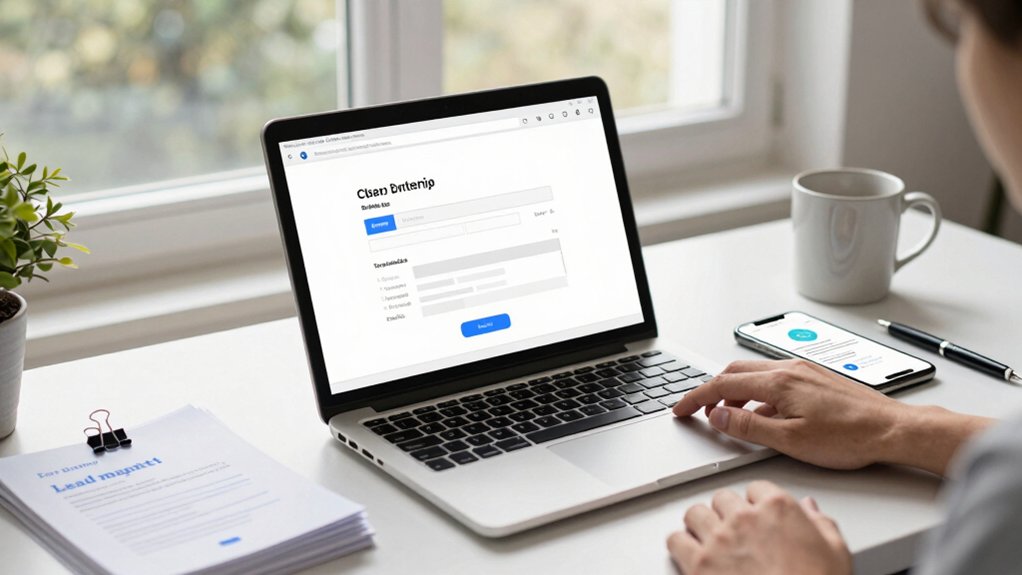
Your opt-in promise is the conversion lever—make the value specific and outcome-focused so visitors can quickly decide it’s worth their email.
Tell them exactly what they’ll get and when they’ll get it (immediately after signup, in their inbox within minutes).
Then set expectations by stating how often you’ll email, so you earn trust and reduce unsubscribes.
Lead With Clear Value
Because most visitors decide in seconds whether to subscribe, lead with a clear opt-in promise that answers one question: “What do I get, and when do I get it?”
State the outcome, not the format: “Plan your next 30 days of social media posts without guesswork” beats “Get my newsletter.”
Tie the promise to a measurable win—time saved, mistakes avoided, revenue opportunities spotted.
If you focus on personal branding, promise a specific transformation like “Position your expertise in three messages recruiters remember.”
Match your language to the visitor’s stage: beginners want a roadmap; intermediates want templates; advanced readers want benchmarks.
Keep it one sentence, front-load the benefit, and repeat it on your button and header.
Clarity lifts opt-ins, not cleverness.
Set Instant Delivery Expectations
How fast should subscribers get what you promised—immediately, in 5 minutes, or on a specific day? State it in your opt-in so you reduce anxiety and boost conversions. When people know the delivery window, they’re more likely to submit an email because you’re offering instant gratification without guesswork.
Write a concrete promise: “Get the checklist in your inbox within 2 minutes,” or “Download instantly after confirming.” Then support it with clean email etiquette: tell them to check Promotions/Spam, whitelist your address, and reply if it doesn’t arrive.
This prevents “I never got it” drop-offs and keeps trust high. Your goal is simple: set a measurable expectation, meet it consistently, and make the first win effortless for them.
Specify Content Frequency
Once you’ve nailed the delivery window, lock in the next trust-builder: frequency. Tell subscribers exactly how often you’ll email—weekly tips, a 5-day starter series, or twice-monthly updates—so they can predict the inbox impact. Clear frequency promises can lift opt-in rates because uncertainty kills sign-ups and drives early unsubscribes.
Make the promise measurable: “Every Tuesday” beats “occasionally.” Pair frequency with value: “One actionable play + one template.” Then use list segmentation to keep cadence relevant; high-intent leads can get more touchpoints while casual readers stay on a lighter schedule.
Finally, commit to email personalization so each send feels tailored, not spammy: subject lines by goal, content blocks by interest, and timing by behavior. Consistency turns expectations into conversions over time.
Build a High-Converting Signup Landing Page
Although you can promote your signup link anywhere, a dedicated landing page typically converts far better because it removes distractions and focuses visitors on one decision: join your list.
Keep the page single-purpose: one headline that promises a clear outcome, a short benefit stack, and one form with only the fields you truly need.
Offer an incentive tied to your audience’s top pain point, then reinforce trust with a brief privacy note and a credibility marker (testimonial, metric, or logo).
Use Email analytics to track visits-to-subscribers, scroll depth, and field drop-off, then A/B test one element at a time.
Set up list segmentation at signup with one optional choice (goal, role, or interest) so you can personalize onboarding and lift opens, clicks, and retention over time.
Add Signup Forms to High-Intent Pages
Because intent varies page by page, you’ll grow your list faster by placing signup forms where visitors already show buying or learning momentum—think pricing, product, key blog posts, webinar pages, and checkout/thank-you screens.
Use embedded forms above the fold plus a sticky bar or exit-intent modal to lift opt-ins without derailing browsing.
Match the offer to the page: on pricing, promise implementation tips; on webinars, send reminders; on thank-you pages, invite updates and referrals.
Apply personalization tactics like dynamic headlines based on referral source or product interest, and prefill known fields to cut friction.
Keep fields minimal, add clear value bullets, and A/B test placement and copy.
Guarantee GDPR compliance with explicit consent, purpose wording, and easy unsubscribe links.
Use Content Upgrades to Boost Opt-Ins

You’ll boost opt-ins fastest when you pair each high-performing post with an irresistible, hyper-relevant content upgrade—think checklist, template, or swipe file that removes the next friction point.
You can validate what converts by tracking upgrade-specific conversion rates and doubling down on the formats and topics that beat your baseline.
Then optimize placement by testing in-line CTAs, end-of-post blocks, and exit-intent popups so the upgrade shows up exactly when intent peaks.
Create Irresistible Content Upgrades
When you match a bonus resource to the exact page someone’s reading, opt-ins rise fast.
Build a content upgrade that removes the next friction: a checklist, swipe file, calculator, template, or “done-for-you” example tied to the post’s promise.
Keep it hyper-specific and instantly usable, not a generic ebook.
Use data to choose upgrades: check top-traffic pages, highest-exit posts, and queries in Search Console, then create a one-step win.
For personal branding posts, offer a headline bank or bio formula sheet.
For content repurposing guides, include a repurposing map and weekly schedule template.
Name the upgrade with a measurable outcome (“Write 10 subject lines in 5 minutes”).
Deliver it in one click, and your opt-in rate climbs while list quality stays high.
Optimize Upgrade Placement
A strong content upgrade only performs if readers actually see it at the moment they’re most likely to act, so placement matters as much as the asset itself. Put your opt-in above the fold for skimmers, then repeat it after the first key takeaway, where intent spikes.
Add an in-line CTA near the exact section the upgrade supports, and include a final reminder at the conclusion when you’ve proven value. Use scroll-depth or time-on-page triggers instead of generic pop-ups; they convert better because they match engagement.
Test one variable at a time: position, copy, button color, or form length, and keep the winner. Tag each upgrade for list segmentation, so follow-ups stay relevant. Better relevance drives clicks, reduces complaints, and supports deliverability optimization over time.
Grow Your Email List With Free Promotion Channels
Even if your budget’s $0, free promotion channels can drive a steady stream of qualified subscribers—provided you match your offer to the platform’s intent and track what converts.
Start with Social media: turn top posts into short threads, carousels, or clips that tease one outcome and point to a single opt-in link. Use UTM tags per platform so you can see which source hits your target conversion rate (aim for 25–45% on the opt-in page).
Next, lean on influencer outreach: pitch micro-creators whose audience matches your niche, and offer a co-branded resource or guest post swap. Prioritize partners with high saves, shares, and link clicks—not follower count.
Repurpose any collaboration into a pinned post and a blog update to compound traffic over time.
Deliver the Freebie and Send a 5-Day Welcome Series
Once you’ve attracted sign-ups, you need instant, automated freebie delivery so new subscribers get value in under a minute and you cut drop-off.
Then you’ll run a 5-day welcome sequence that sets expectations, tells your story, and moves readers toward one clear next step each day.
Track opens, clicks, and replies to tighten your messaging and turn new leads into engaged subscribers (and buyers).
Automate Freebie Delivery
When you automate freebie delivery, you turn a sign-up into an immediate payoff and a measurable onboarding flow instead of a manual task. Set a trigger that sends the download link the moment someone confirms, and tag the subscriber by source, lead magnet, and intent.
Those tags power personalization strategies like dynamic content blocks, tailored subject lines, and segmented CTAs that lift clicks. Track delivery rate, open rate, and first-click time to spot friction fast.
Use double opt-in to protect list quality and improve inbox placement. Add automated follow-ups only for non-clickers: resend with a new subject line, swap the link format, or offer a reply-to option.
You’ll increase activation without adding workload or risking inconsistencies.
Write A 5-Day Sequence
Although the freebie triggers the opt-in, your 5-day welcome sequence turns that moment into a conversion path by delivering value fast, setting expectations, and driving the first “yes” (a click, a reply, or a small purchase).
Day 1: deliver the freebie, restate the promise, and ask one quick reply to gauge intent.
Day 2: teach a win-in-10-minutes tactic tied to your offer.
Day 3: share a proof point (case study, metric, or before/after) to strengthen Personal branding and authority.
Day 4: handle the top objection with FAQs and a soft CTA.
Day 5: present a time-bound next step (demo, checkout, consult).
Use List segmentation based on clicks/replies so buyers see offers and beginners get more nurture.
Keep Your List Clean, Segmented, and Engaged
If you want your emails to convert consistently, you can’t treat your list like a bucket—you need to manage it like a performance channel. Start with list hygiene: suppress hard bounces immediately, remove chronic complainers, and sunset contacts who haven’t opened or clicked in 60–90 days. That protects deliverability, keeps inbox placement high, and lowers your cost per sale.
Next, use subscriber segmentation to match intent. Segment by lead magnet, link clicks, purchase history, and engagement level, then tailor subject lines, offers, and send times. Run re-engagement campaigns with a clear value reset and a one-click “stay subscribed” option.
Track open rate, click rate, and revenue per recipient by segment, and double down on the cohorts that convert. Clean, relevant lists scale faster than big lists.
Frequently Asked Questions
What Are the Legal Requirements for Email Consent in My Country?
You’ll need to follow your country’s Consent regulations, which usually require explicit opt-in, clear purpose disclosure, and an easy unsubscribe in every message.
For Legal compliance, keep timestamped proof of consent, identify your business, and avoid misleading subject lines.
If you target EU/UK, GDPR/PECR applies; Canada uses CASL; the US uses CAN-SPAM.
Tell me your country and audience location, and you’ll get a checklist.
How Often Should I Email New Subscribers After the Welcome Series Ends?
Email new subscribers 1–2 times per week after your welcome series ends, then adjust based on opens, clicks, and unsubscribes.
Start with higher frequency for 2–3 weeks to build habit, then taper if engagement drops.
Use segmentation strategies to match cadence by intent (buyers vs browsers).
Apply personalization techniques like dynamic product blocks and behavior-triggered sends.
You’ll protect deliverability, lift conversion rates, and reduce churn over time.
Which Email Metrics Matter Most When My List Is Still Small?
Focus on metrics tied to learning and revenue: delivery rate, open rate, click-through rate, reply rate, and conversion rate.
Track unsubscribe and spam complaints to protect deliverability.
With a small list, prioritize qualitative signals—replies and clicks—over vanity volume.
Use personalization strategies to lift clicks, and apply segmentation techniques to compare cohorts (new vs. returning, interests).
Watch time-to-first-click and conversion per subscriber to validate offers faster.
How Do I Handle Subscribers Who Reply With Support or Sales Questions?
Treat replies as high-intent leads. You should tag them by topic, route urgent support to a human within 24 hours, and send automated responses that confirm receipt, set expectations, and collect key details.
Use Personalization strategies—reference their plan, last click, or signup source—to speed resolution and upsell relevant offers.
Track reply-to-close rate, time-to-first-response, and CSAT to optimize workflows and protect conversions.
Log FAQs into templates and sequences.
When Should I Delete Inactive Subscribers Versus Try Re-Engagement?
Delete inactive subscribers when they’ve shown zero opens/clicks for 60–90 days (B2C) or 90–180 days (B2B) after one re-engagement sequence.
First, use Segmentation strategies to isolate “cold” cohorts by last engagement and acquisition source.
Apply Content personalization—new value offer, preference update, or stronger CTA—and measure lift.
If they still don’t respond, suppress or remove to protect deliverability and improve conversion rates.
Conclusion
You’re not buying a crowd; you’re planting an orchard. When you define your reader, you choose the right soil. When you offer a niche-tied lead magnet and a clear opt-in promise, you trade real value for permission—your highest-converting asset. Your landing page and content upgrades turn attention into measurable signups. Free channels bring steady foot traffic. Then your 5-day welcome series builds trust fast. Prune with segmentation and list hygiene, and your engagement rate keeps compounding.Work with experts, if you have the budget.